

If you’ve found yourself Googling “what to wear in engagement photos” at 11pm only to leave with 37 tabs open and somehow more confused than when you started… you’re definitely not alone.
Figuring out what to wear for engagement photos can feel weirdly high-pressure. You want to look good, feel comfortable, coordinate with your partner, and not end up in photos that feel stiff, trendy in a bad way, or overly styled.
Most advice online makes a lot of assumptions about who you are, what your style is, or what engagement photos are “supposed” to look like.
This guide is different.
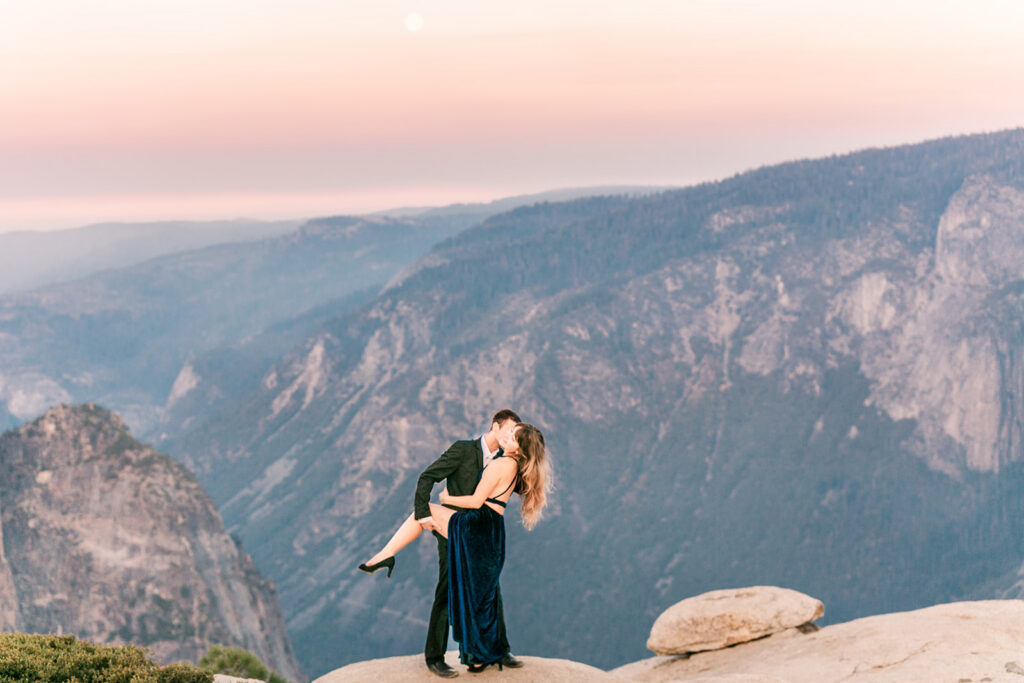
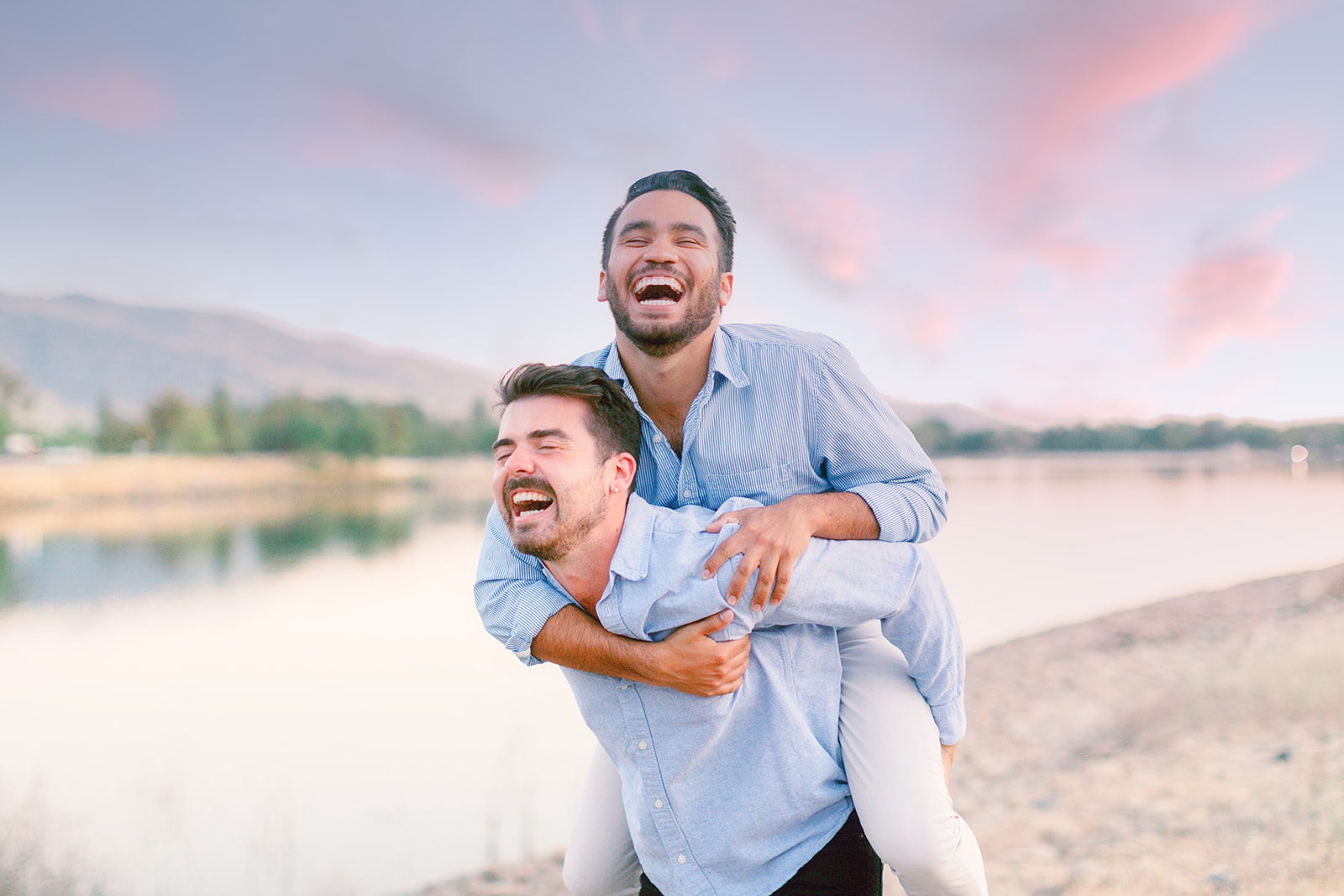
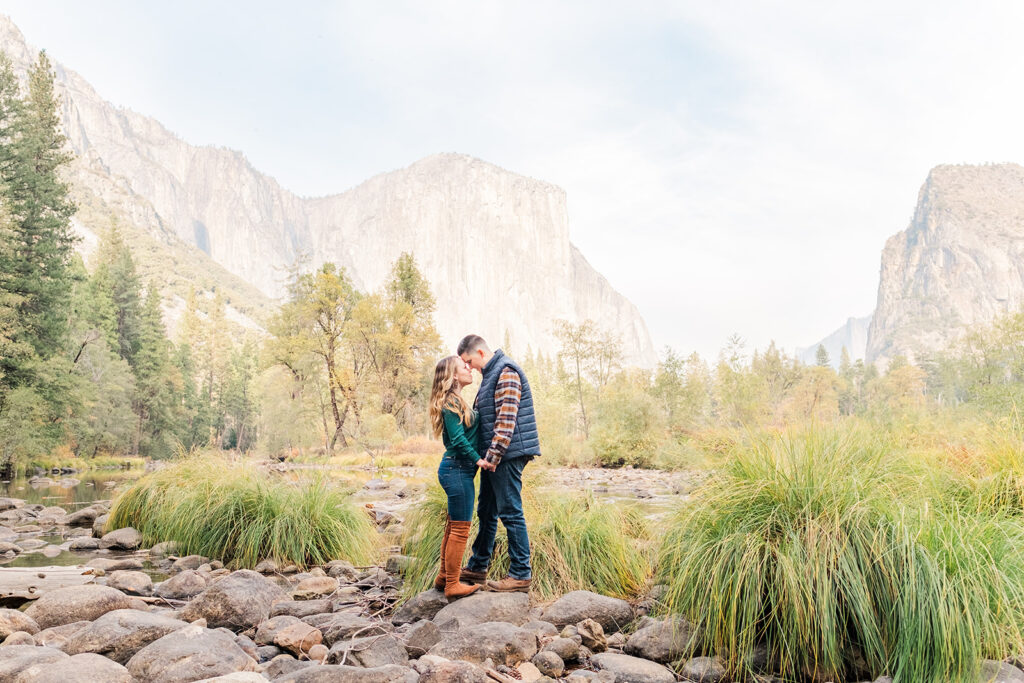
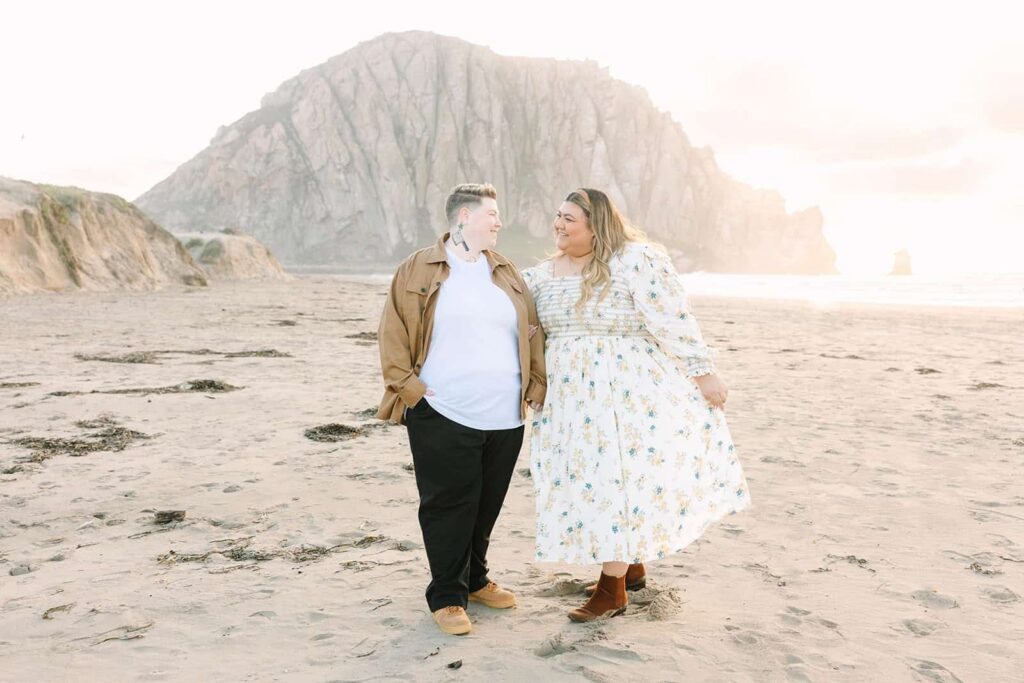
Whether you’re two people in suits, two people in dresses, one of each, or absolutely none of the above, the same core rules apply: wear something that fits well, feels like you, and works alongside what your partner is wearing — not against it.
These are the exact things I walk my couples through before their session, all in one place.
The Most Important Rule: Fit Matters More Than Anything Else
Before color palettes, Pinterest inspiration, or whether your outfit feels “photo-worthy,” the thing that makes the biggest difference in engagement photos is fit.
When clothes fit you well, you look more comfortable and more confident immediately. And cameras pick up on that.
On the flip side, outfits that are too tight, too oversized, or constantly needing adjustment tend to show up in photos fast. If you’re tugging at straps, pulling something down, adjusting sleeves every five minutes, or worrying about how something sits when you move, it’s going to affect how relaxed you feel.
You also do not need an entirely new wardrobe for engagement photos.
A tailor can work miracles on off-the-rack clothing for way less money than most people expect. Good undergarments matter. Belts matter. Steaming your outfit matters more than buying something expensive.
Wearing a dress or skirt for an outdoor session? I highly recommend shorts underneath. We’re walking, sitting, hiking, twirling, climbing over rocks sometimes — I want you focused on each other, not worrying about a wardrobe malfunction.
The overall goal here is simple: wear something you can move, sit, walk, and breathe in comfortably.
Comfort photographs well.
Wear What Feels Like You
This one matters a lot.
Don’t wear something just because you think it looks “good for photos” if it makes you uncomfortable. There is no magical point during your session where you suddenly stop feeling self-conscious.
Your engagement session probably isn’t the time to start wearing bodycon dresses if you never wear them in real life.
Don’t force yourself into heels if you hate wearing them.
Lean into it if you feel best in boots and an oversized sweater.
Your engagement photos should feel like an elevated version of you, not like you borrowed someone else’s personality from Pinterest.
On the other hand, if there’s something you love about yourself, highlight it. Wear colors you always feel confident in. Wear pieces that make you stand a little taller.
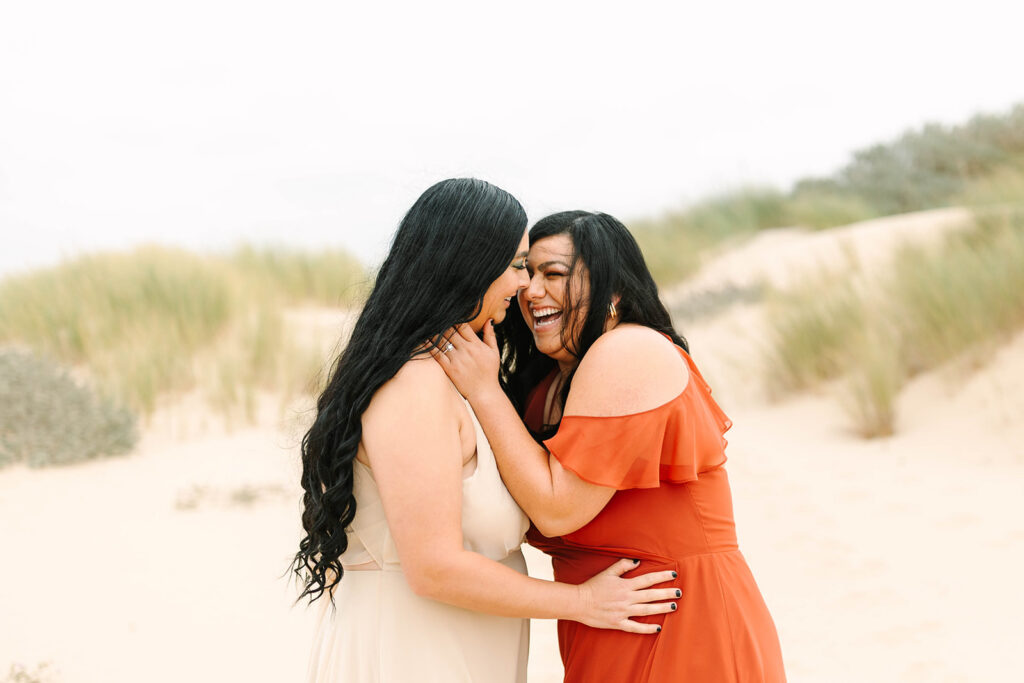
The best engagement photos don’t come from perfect outfits.
They come from people who actually feel comfortable enough to be fully present with each other.
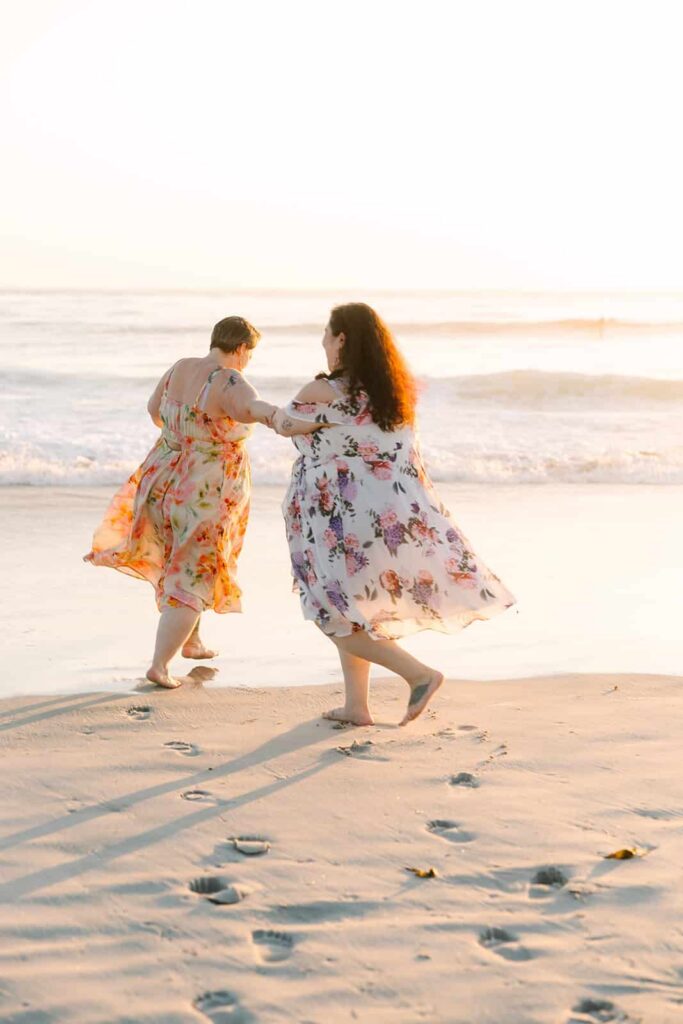
Coordinate — Don’t Match
I cannot stress this enough: you do not need matching outfits.
Matching white shirts and jeans had their moment. We can leave them there.
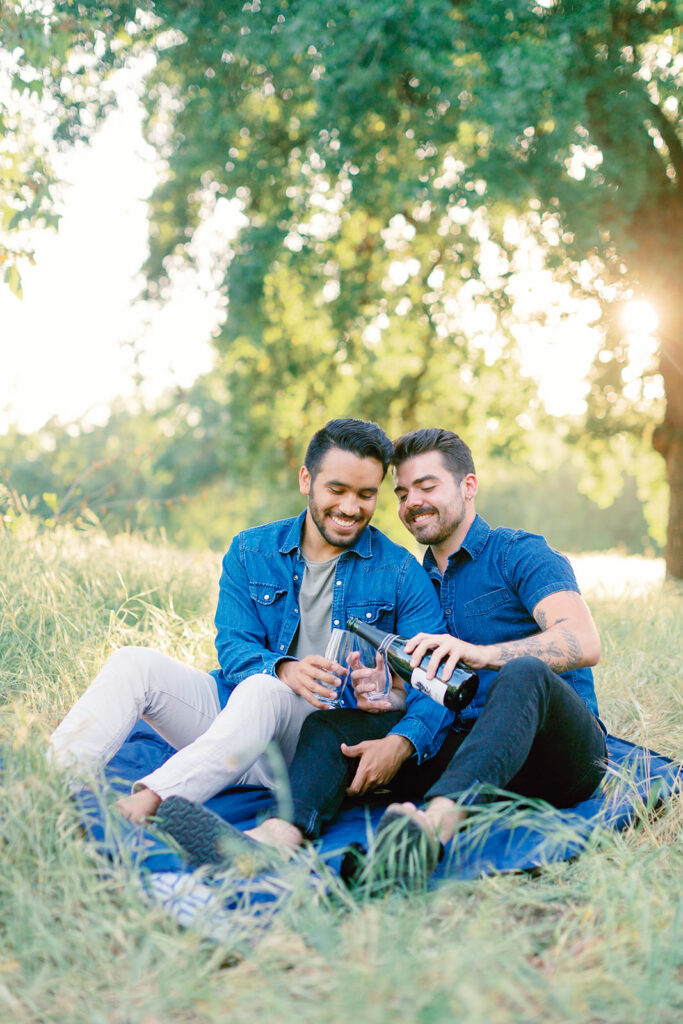
Instead of trying to match exactly, think about your outfits like they belong in the same world.
You want coordination, not duplication.
A few easy ways to make that happen:
Stay in the Same Color Family
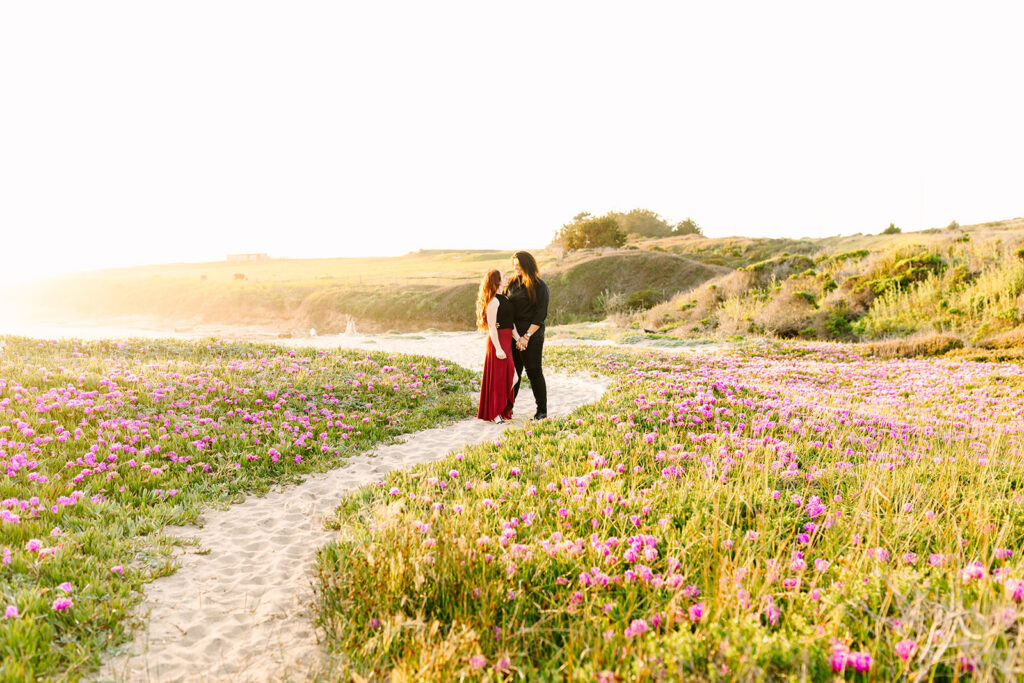
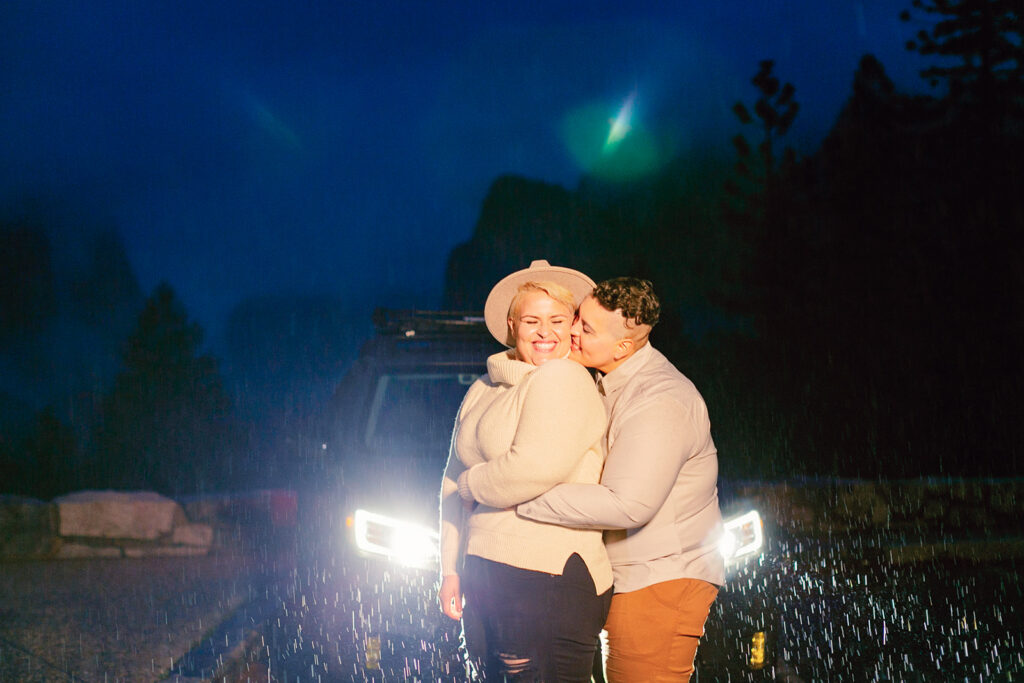
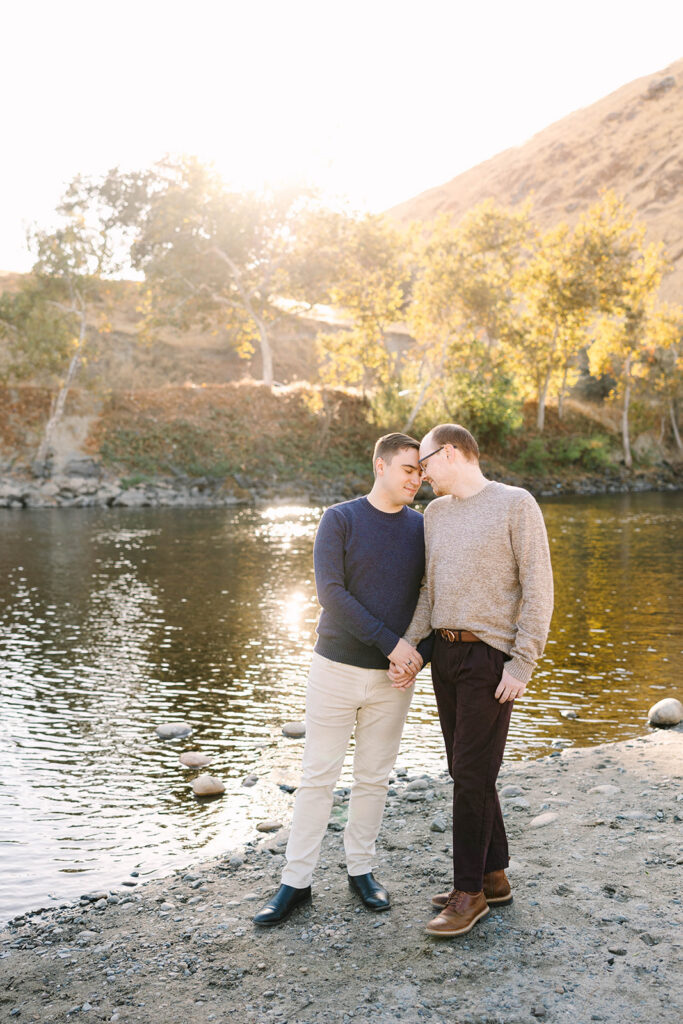
Warm tones usually work well together. Cool tones usually work well together. Earthy neutrals almost always photograph beautifully.
You don’t need to wear the same colors — you just want things to feel cohesive instead of competing.
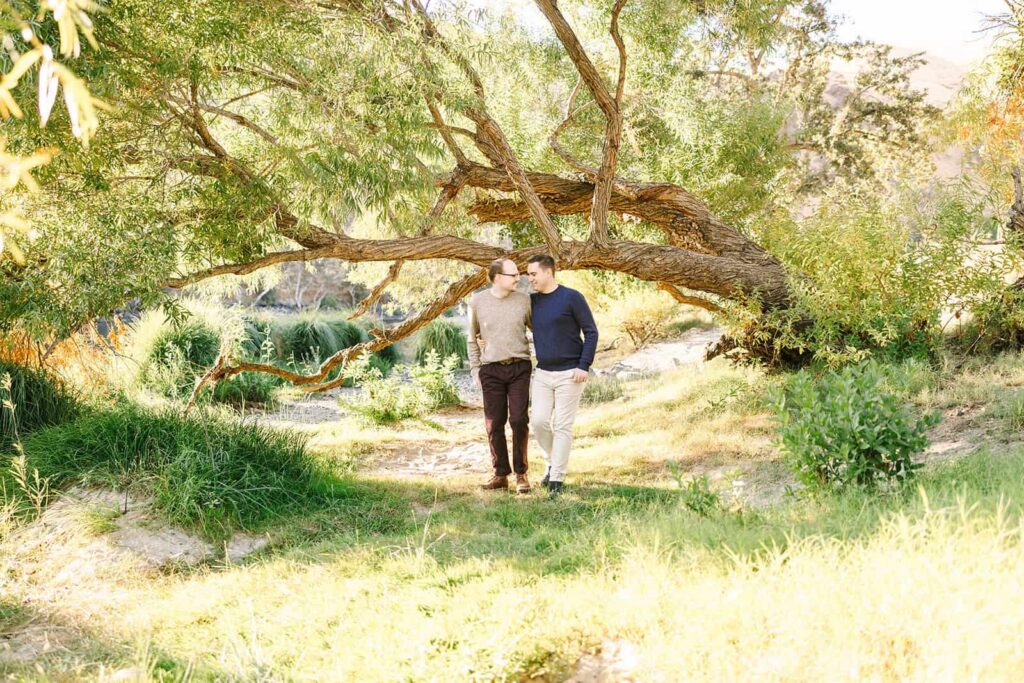
Balance Simple + Detailed
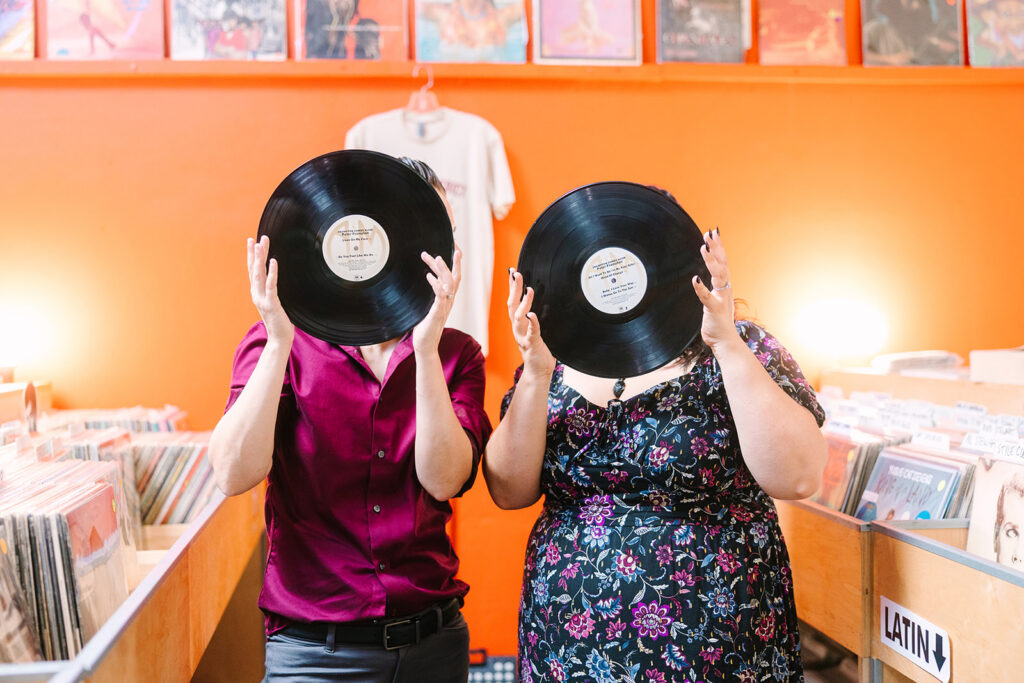
When one person is wearing a bold pattern, textured jacket, or statement piece, the other person should stay a little simpler.
Too many competing details pull attention away from your faces.
One textured outfit + one cleaner outfit usually photographs really well.
Match the Formality Level
This is probably the biggest thing couples overlook.
If one of you is dressed for a fancy dinner and the other looks ready for a grocery run, the disconnect shows up immediately in photos.
You don’t both have to dress formally — just aim for the same general level of dressed up.
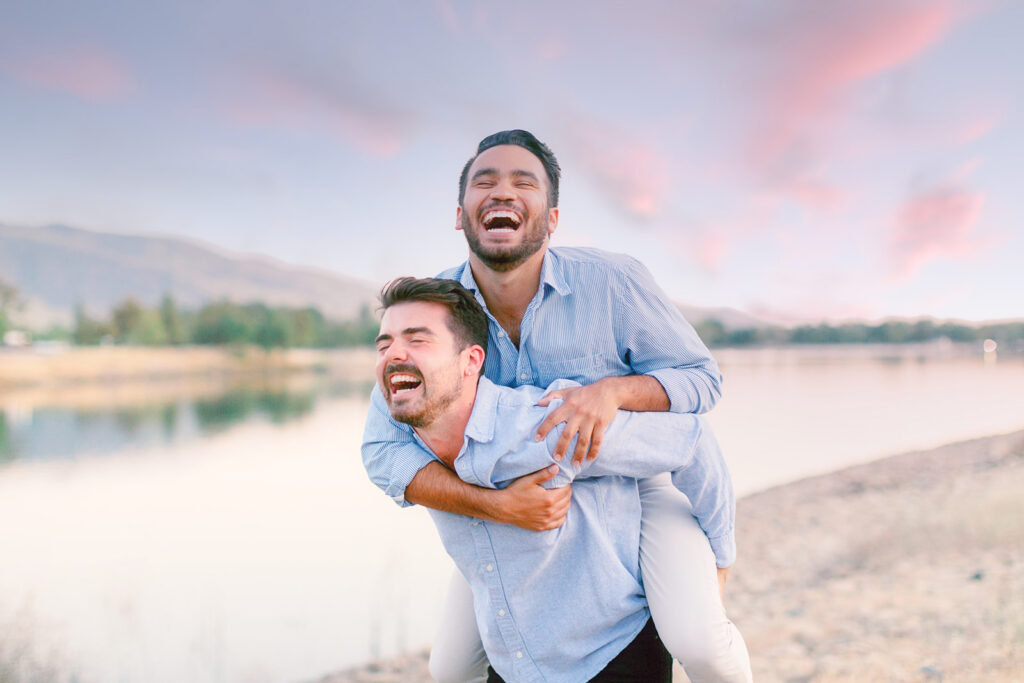
The Best Colors for Engagement Photos
In general, softer and more muted tones photograph better than super bright or heavily saturated colors.
Bright colors can reflect onto skin tones in weird ways, especially outdoors. Neon shades are usually the hardest to work with because they pull attention away from your faces.
Some of my favorite colors for engagement sessions:
- Navy
- Cream
- White
- Tan
- Rust
- Burnt orange
- Olive green
- Mustard yellow
- Dusty blue
- Soft pink
- Warm gray
- Earth tones in general
These colors tend to photograph really naturally in outdoor light and work well across different seasons and locations.
If certain colors already make you feel good when you wear them in real life, trust that instinct.
Colors I Usually Recommend Avoiding
- Neon colors
- Bright red
- Hot pink
- Electric blue
- Highlighter yellow
They can absolutely look fun in person — they’re just trickier in photos.
Patterns: Keep Them Simple
Patterns can work really well in engagement photos when they’re intentional.
The biggest thing I’d avoid is tiny repetitive patterns like:
- small checks
- thin stripes
- tiny herringbone
- super tight geometric prints
Cameras sometimes create a weird visual distortion effect with these called moiré. It’s a photography thing, not a style thing, but it can make patterns look strange on camera.
Large florals, softer prints, linen texture, knits, and subtle patterns usually photograph beautifully.
My general rule:
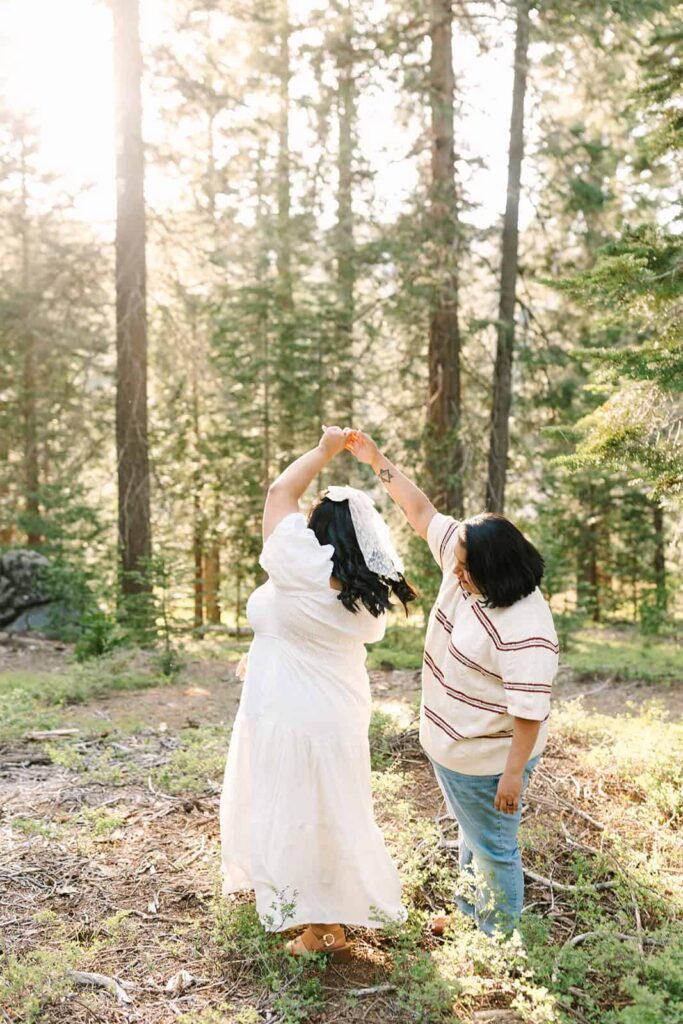
Usually one person wearing a pattern paired with one person in solids works best.
Easy.
Bring Two Outfits If You Can
I’m a huge fan of bringing two outfits to engagement sessions.
It gives your gallery more variety without needing multiple locations, and it helps the session feel more dynamic overall.
Usually I recommend:
- One outfit that feels more casual or everyday
- One outfit that feels a little more elevated or dressy
This doesn’t have to mean formal.
Sometimes “dressy” just means a nicer jacket, a better-fitting dress, or swapping sneakers for boots.
We’ll normally time the outfit change around a location shift or lighting change anyway, so it flows naturally.
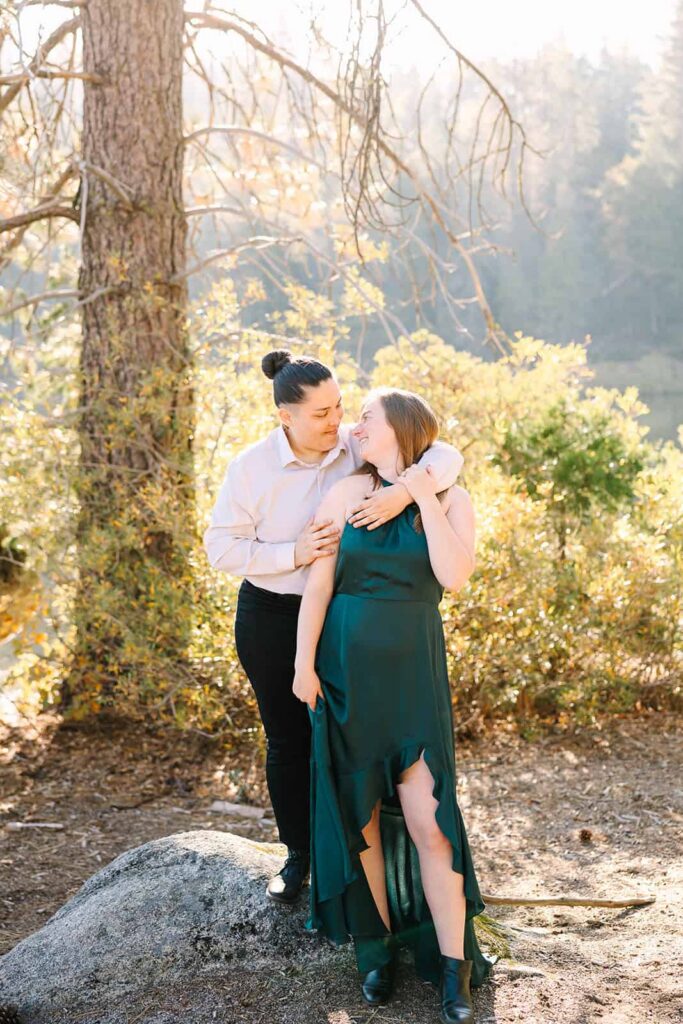
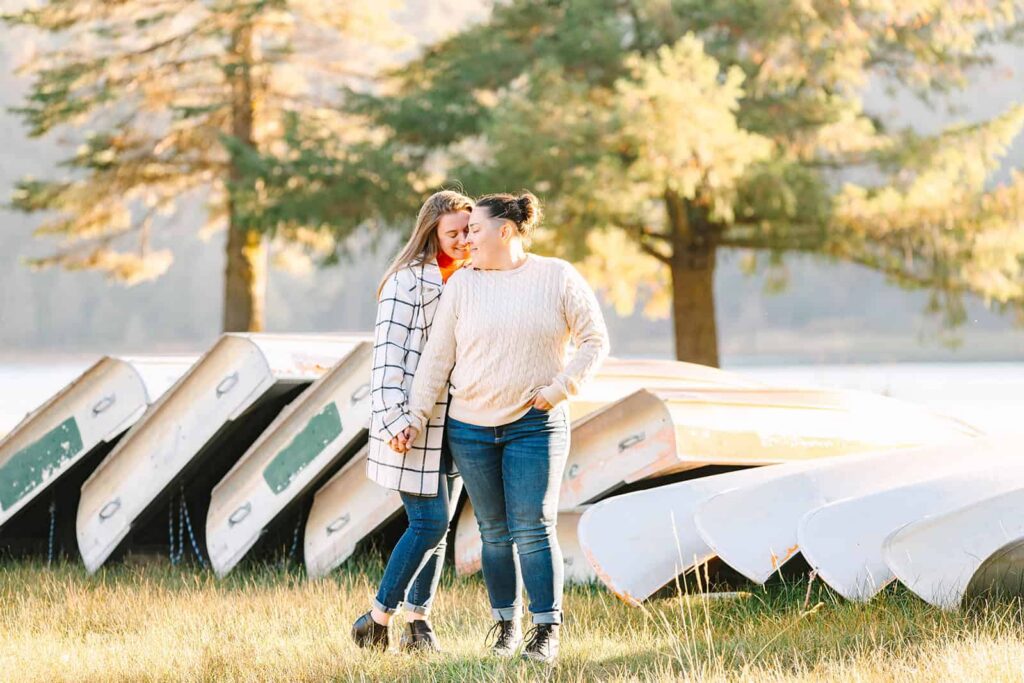
Accessories Should Add Personality — Not Distract
Accessories are where your personality can really come through.
Jewelry, jackets, boots, hats, scarves, sunglasses, watches — all of those can add movement and character to photos.
And if something feels especially you, bring it.
A couple things I usually recommend:
- Keep jewelry relatively simple
- Avoid anything super bulky or distracting near your face
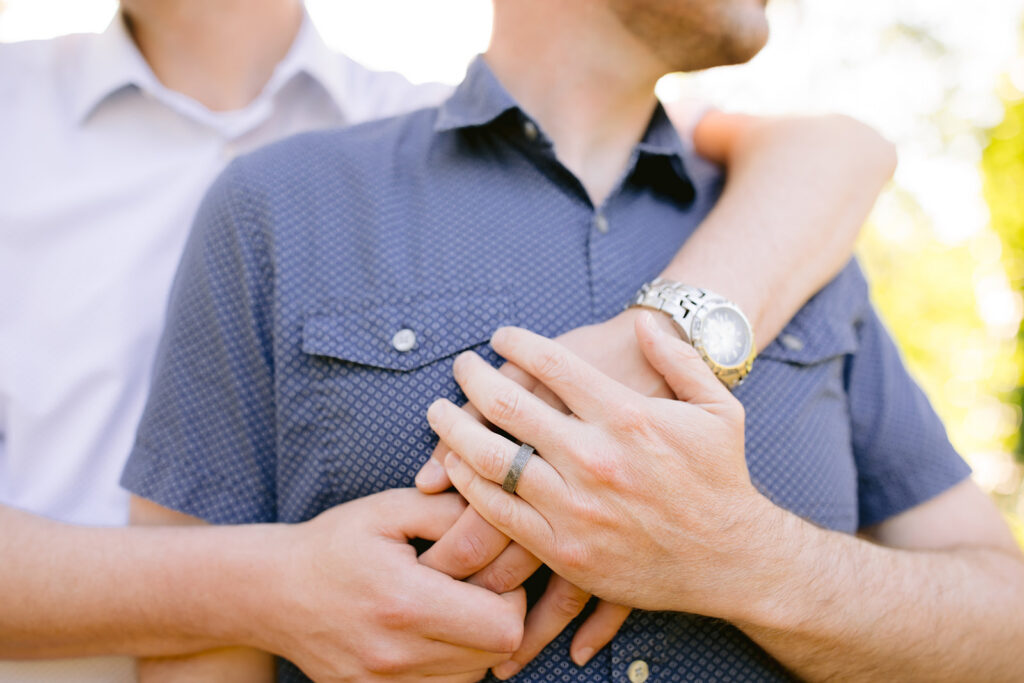
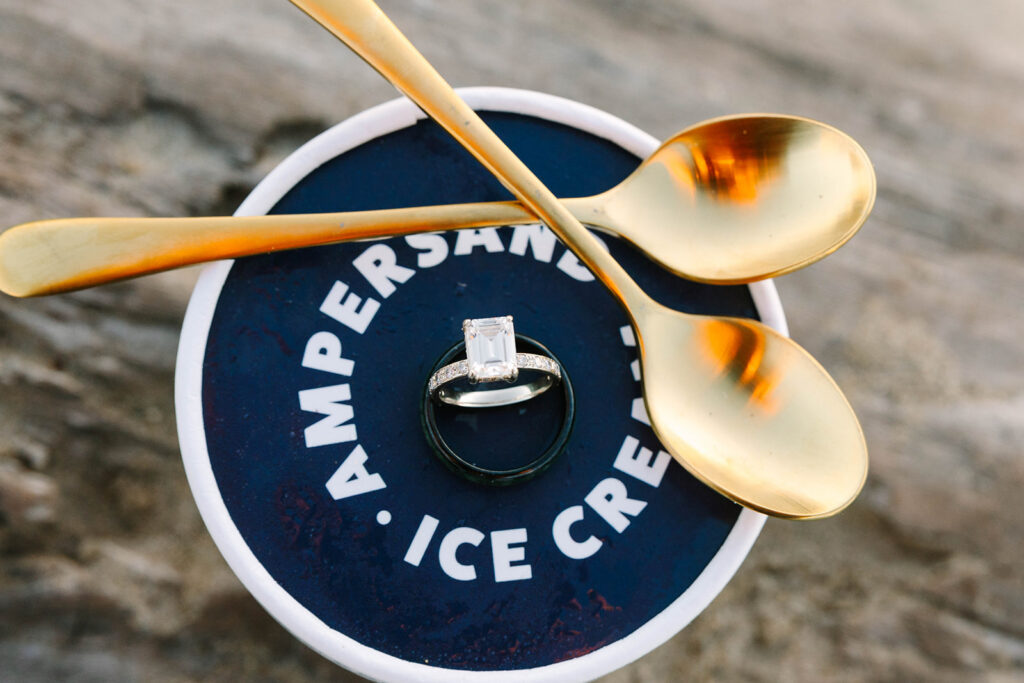
- Clean your rings beforehand (I promise it makes a difference in close-up shots)
Also: layers photograph beautifully.
Jackets, coats, sweaters, and overshirts give you something natural to interact with during the session, which helps photos feel less stiff.
Props: Only If They’re Actually Meaningful
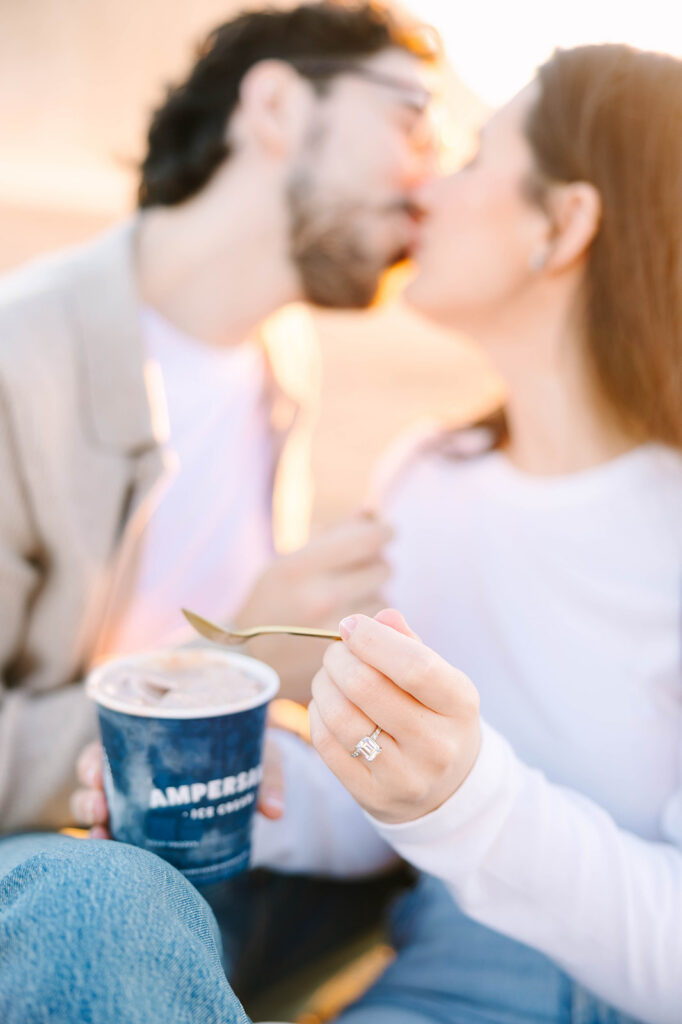
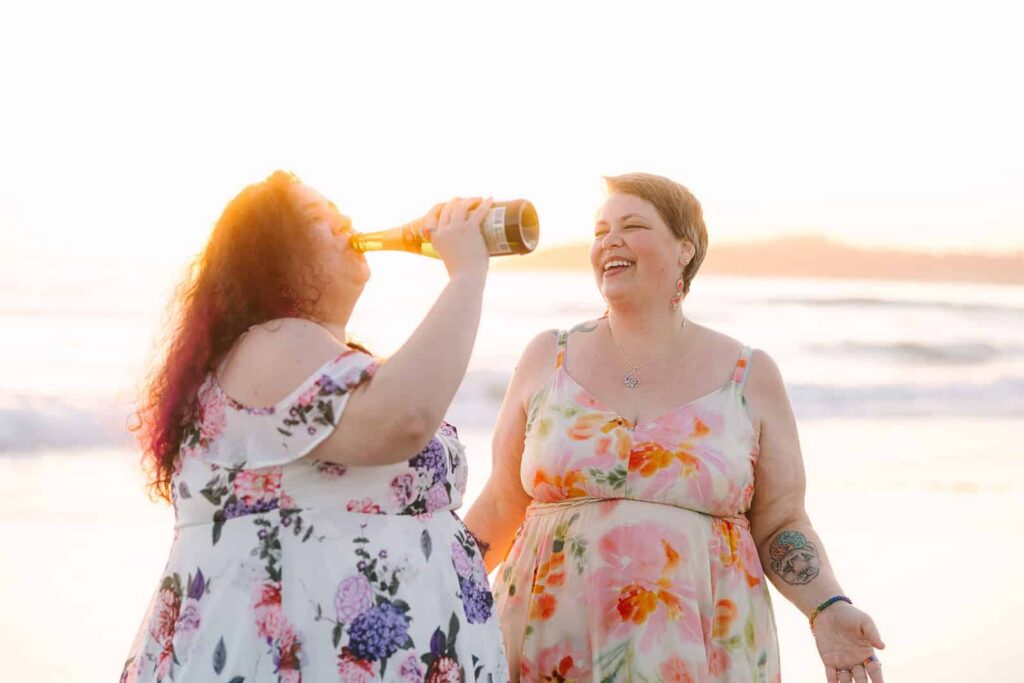
The best props are the ones that already exist naturally in your life.
Your dog.
A blanket you always bring places.
Coffee.
Champagne.
Records.
Books.
Your camper van.
A guitar you actually play.
Things like that work because they feel real.
What usually doesn’t photograph as naturally are props that only exist for the photos themselves.
Things like:
- letter boards
- signs
- random Pinterest props
- giant wooden words
- anything overly staged
The goal is photos that feel alive and personal — not like a themed set.
Hair, Makeup, and Prep Tips
Skin
Drink more water than you think you need the few days before your session.
Avoid trying a new spray tan or skincare treatment right before your photos.
I’ve seen too many last-minute skin disasters.
Makeup
If you wear makeup regularly, I usually recommend a slightly more polished version of your everyday look.
The camera softens makeup a bit naturally, so going a tiny bit heavier than normal photographs well.
But still: you should look like yourself.
If you’re already booking professional hair and makeup for your wedding, engagement photos are honestly the perfect trial run.
Hair
Whatever you normally do with your hair? Start there.
Movement and texture photograph beautifully, especially outdoors.
Nails + Rings
People forget this constantly.
I photograph hands and rings throughout the entire session, so clean rings and neat nails genuinely make a difference.
Your Engagement Session Prep Checklist
One Month Before
- Start planning both outfits
- Send outfit photos to your photographer if you want feedback
- Book hair and makeup if needed
- Handle any tailoring or alterations early
The Week Before
- Steam or iron outfits
- Clean rings
- Get nails done if you want to
- Avoid bad sunburns and last-minute spray tans
The Day Before
- Charge your phone
- Download maps if your location is remote
- Shave the day before instead of day-of if your skin gets irritated easily
Day Of
- Leave earlier than you think you need to
- Bring water
- Bring touch-up supplies
- Bring both outfits and shoes
- Bring your rings
(Yes, people forget them all the time.)
Your Location and the Season Matter
Your outfit should make sense for where your engagement session is happening.
A beach session is going to feel different than a downtown session.
A mountain session in October is different than a summer field at golden hour.
Think about movement, temperature, walking distance, and practicality alongside aesthetics.
And when in doubt, ask your photographer.
I help couples with outfit planning all the time because I’d much rather help beforehand than have you stressed the day of.
The Thing That Actually Matters Most
There’s a lot of advice in this blog.
The reason engagement photos feel meaningful years later usually has very little to do with the clothes.
The photos people end up loving most are almost always the ones where they look relaxed, connected, and genuinely like themselves.
That’s the goal.
Not perfect poses.
Not perfectly curated outfits.
Not pretending to be people you’re not.
Just the two of you, hanging out together, in a place that matters to you.
The outfits are there to support the experience — not become the entire focus of it.
Leave your session feeling like you actually had fun together instead of surviving a photoshoot,
That’s usually when the best photos happen.
FAQ: What to Wear in Engagement Photos
What colors should you avoid in engagement photos?
I usually recommend avoiding neon colors, super bright reds, electric blues, and anything extremely saturated. Bright colors can reflect onto skin tones and pull attention away from your faces.
Should couples match in engagement photos?
No — coordinated outfits almost always photograph better than matching outfits. Focus on complementary colors, similar levels of formality, and textures that work together naturally.
How many outfits should you bring to engagement photos?
Two outfits is usually ideal if your session allows for it. One casual look and one slightly dressier look gives your gallery more variety.
Can you wear patterns in engagement photos?
Absolutely. Just keep patterns simple and avoid tiny repetitive prints that can create distortion on camera. Usually one patterned outfit paired with one solid outfit works best.
What should you wear for outdoor engagement photos?
Choose outfits you can comfortably move around in and that fit the location and weather. Layers, earthy tones, and comfortable shoes tend to work especially well outdoors.
Ready to Plan Your Engagement Session?
Planning engagement photos and need help choosing outfits, locations, or making the whole experience feel natural instead of awkward? I’m always happy to help guide you through it.
The best sessions feel less like a photoshoot and more like an actual date together — just documented honestly.